Last updated on November 29, 2026
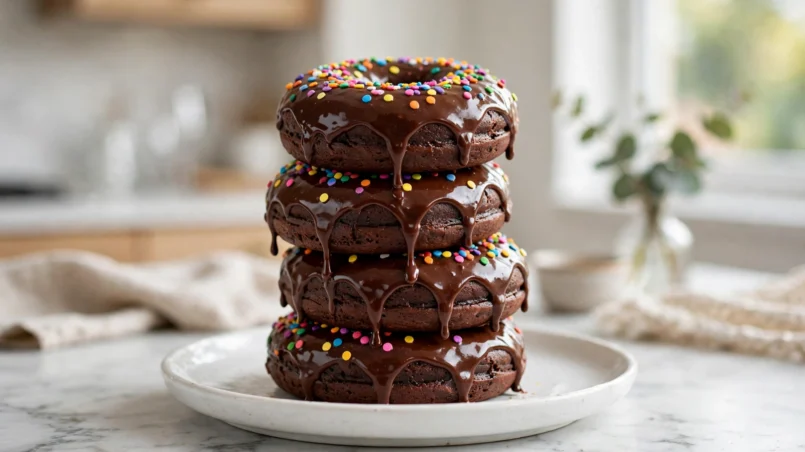
There is a bakery-case donut I have wanted on this site since the first recipe went up, and it is this one: a cake-like chocolate donut, baked in a pan instead of fried in oil, with a chocolate glaze that sets into a shiny shell. This chocolate donuts recipe is the fastest baked item on Chocolacious after the mug cake — about 27 minutes from measuring to glazing, no yeast, no rising, no frying, and no deep-fryer smell hanging around the kitchen for the rest of the day. One bowl, one donut pan, and a glaze that takes two minutes in the microwave. The donuts come out soft and tender, dark with chocolate, and they hold in your hand the way a bakery donut does — which is the whole point of a donut, really. You cannot eat a pancake while you walk to the car.
Baked donuts fail in three ways, and this recipe is built around all three: dry and tough from overmixing, pale chocolate flavour from unbloomed cocoa, and a glaze that slides off or never sets. The fixes are small and all in the method. First, bloom the cocoa in very hot water before it meets anything else — the same bloom trick as our chocolate pancakes recipe, and the reason these taste like chocolate instead of cocoa powder. Second, cornstarch in the dry mix: 2 teaspoons is the quiet trick that makes the crumb soft and melt-in-the-mouth instead of muffin-dense. Third, fill the pan only two-thirds full and do not overbake — 10 to 12 minutes at 350°F, out when a toothpick comes out clean, because a baked donut goes from perfect to dry in two extra minutes. Fourth, glaze while the donuts are just slightly warm, not hot: dip the smooth top once, let the excess drip, and the chocolate-coconut-oil glaze sets into a shiny shell as it cools. That bloom, cornstarch, two-thirds-fill, dip-while-warm rule is why this chocolate donuts recipe works. And if you want the same chocolate cold from the fridge instead of warm from the oven, our chocolate bark recipe is bark for the tin, donuts for the breakfast table — ten minutes of hands-on work, no oven at all.
In This Article
- Why This Recipe Works
- Ingredients
- How to Make Chocolate Donuts
- The Glaze Guide
- Pro Tips and Troubleshooting
- Variations
- Serving and Storage
- Frequently Asked Questions
- More Chocolate Recipes
Why This Recipe Works
Most baked donut recipes read like a muffin recipe poured into a different pan, and that is exactly how they taste — muffin-dense, pale, and a little dry. The difference between a donut that tastes like a bakery case and one that tastes like a muffin with a hole in it is not the pan. It is four decisions made before the batter ever meets the pan, and every step in this recipe has a reason.
Hot water blooms the cocoa. Dry cocoa stirred into cold batter tastes dusty and flat, because cocoa powder needs heat and liquid to release its flavour. Whisking the cocoa into very hot water first — the same bloom trick that makes the site’s pancakes taste like chocolate — wakes it up before it meets the flour, so the donuts taste dark and chocolatey instead of vaguely brown. It costs thirty seconds and changes the whole recipe. The bloom works with natural cocoa or Dutch-process cocoa; natural is used here, and Dutch-process will give you a darker, milder donut if that is what you have.
Cornstarch keeps the crumb soft. Two teaspoons of cornstarch in the dry mix interferes with gluten formation, which is why the crumb is soft and melt-in-the-mouth instead of chewy. It is the same quiet trick cake flour uses, and it is what separates a donut crumb from a muffin crumb. Do not skip it, and do not add more — two teaspoons is the amount that softens the crumb without making it crumbly.
Buttermilk does two jobs at once. Its acid reacts with the baking soda for lift, so the donuts rise in their ten minutes in the oven, and its fat keeps the crumb tender. The baking powder is in there too, for insurance — buttermilk and soda do the real rising, and the powder makes sure it happens evenly in every cavity. If you have no buttermilk, stir a tablespoon of lemon juice or white vinegar into 3/4 cup of whole milk and let it sit for five minutes; it is not quite the same, but it is close, and it is far better than plain milk.
The donut pan bakes fast, so the bake is short. A donut’s ring shape bakes quickly and evenly — heat reaches the batter from the middle as well as the outside — so 10 to 12 minutes is enough, and more is dryness. That is the whole reason baked donuts can be a 27-minute recipe: the pan does the work that a deep fryer does, without the oil, and the toothpick test tells you the truth. Pull them at 10 minutes and test; if the toothpick comes out clean, they are done, even if they look a little pale on top. The glaze covers the top anyway.
Coconut oil is what makes the glaze set. Plain melted chocolate stays soft and sticky at room temperature — it smears, it sticks to the plate, it never quite firms up. Coconut oil is solid at room temperature, so a glaze made with it sets into a shiny shell as it cools. That is the bakery-case look, and it is also why the sprinkles stay where you put them. The same rule is in the site’s chocolate ganache recipe if you want a ganache drizzle instead of the glaze — ganache for pouring, glaze for dipping.
Ingredients
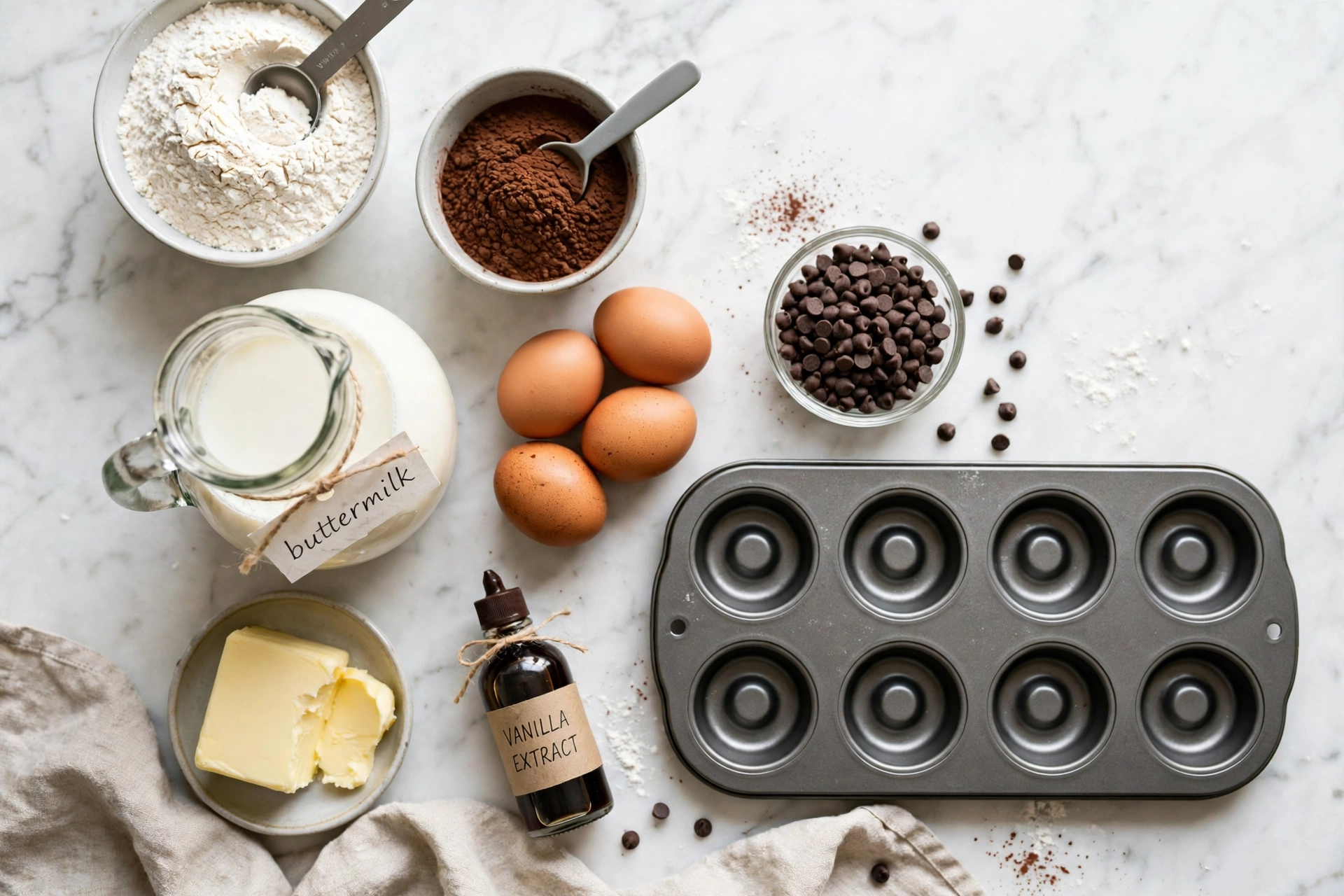
The recipe card lists sixteen ingredients across three groups — seven dry, seven wet, and two for the glaze. That sounds like a lot until you look at the list: most of it is the pantry already. Flour, sugar, cocoa, baking powder, baking soda, salt, butter, egg, vanilla — the only thing worth a special trip is the buttermilk, and the only piece of equipment you might not own is the donut pan itself. The recipe makes 12 donuts, one full 12-count pan.
The dry: 1 3/4 cups (220 g) all-purpose flour, 1/4 cup (50 g) granulated sugar, 1/4 cup (50 g) light brown sugar firmly packed, 2 teaspoons cornstarch, 1 teaspoon baking powder, 1/4 teaspoon baking soda, and 1/2 teaspoon salt. Spoon and level the flour — scooping from the bag packs it down and gives you too much flour, which is the fastest way to a dry donut.
The wet: 1/4 cup very hot water (boiling or steaming), 1/4 cup (25 g) natural cocoa powder, 4 tablespoons unsalted butter melted, 1 large egg at room temperature, 1 1/2 teaspoons vanilla extract, 3/4 cup (177 ml) buttermilk, and 1/3 cup mini chocolate chips, folded in last. The egg should be at room temperature so it blends into the batter instead of seizing the melted butter — ten minutes in a bowl of warm water does it if you forgot to take it out.
The glaze: 1 cup semisweet chocolate chips and 2 1/2 teaspoons coconut oil or vegetable shortening, plus sprinkles if you want them. Semisweet chips are the right sweetness against a not-very-sweet donut; milk chocolate chips make a sweeter, softer glaze that takes longer to set.
A note on the cocoa. Natural cocoa is used here, and the hot-water bloom works with either natural or Dutch-process. The difference is colour and tone: natural cocoa is lighter and a little sharper, Dutch-process is darker and milder, almost black in the finished donut. Either one works in this recipe — use what you have, and do not buy a new tin for it. What matters is the bloom, not the brand: dry cocoa in cold batter tastes dusty no matter how good the tin is, and bloomed cocoa tastes like chocolate no matter how cheap it is.
How to Make Chocolate Donuts
Seven steps, and the whole thing takes about 27 minutes — 15 minutes of prep, 12 minutes in the oven, and a few minutes for the glaze to set. The one rule that governs the whole method: bake the batter immediately once the wet meets the dry, because the baking soda starts working the moment they touch. Do not hold the batter while you answer the phone.
Step 1: Heat the oven and grease the pan
Preheat the oven to 350°F (175°C) and grease and flour a 12-count donut pan, or spray it well with baking spray. Grease thoroughly — every cavity, including the centre post — because a baked donut that sticks is a donut that tears, and a torn donut does not glaze neatly. If your pan is nonstick, grease it anyway: nonstick is a promise, not a guarantee, and chocolate batter is sticky.
Step 2: Whisk the dry ingredients
Whisk the flour, both sugars, cornstarch, baking powder, baking soda and salt together in a large bowl. Whisking instead of stirring matters here: it breaks up the lumps in the brown sugar and distributes the baking powder and soda evenly, so no single donut gets a bitter pocket of soda. Thirty seconds of whisking is enough.
Step 3: Bloom the cocoa, then whisk in the wet
Put the cocoa powder in a medium bowl and whisk in the very hot water until smooth — this is the bloom, and you will see the cocoa turn dark and glossy as it hydrates. Then whisk in the melted butter, the egg, the vanilla and the buttermilk, one at a time, until the mixture is smooth. Work in this order, not the other way round: the hot water blooms the cocoa, and the butter and egg go in after, so nothing seizes and nothing curdles.
Step 4: Fold the wet into the dry — and stop early
Pour the wet mixture into the dry and stir only until just combined — a few streaks of flour are fine, and a few lumps are fine too. Then fold in the mini chocolate chips last, with two or three gentle folds. This is the step that decides whether the donuts are tender or tough: every extra stir develops more gluten, and gluten is what makes a donut chewy instead of soft. If the batter looks a little undermixed, it is probably right.
Step 5: Fill the pan two-thirds full
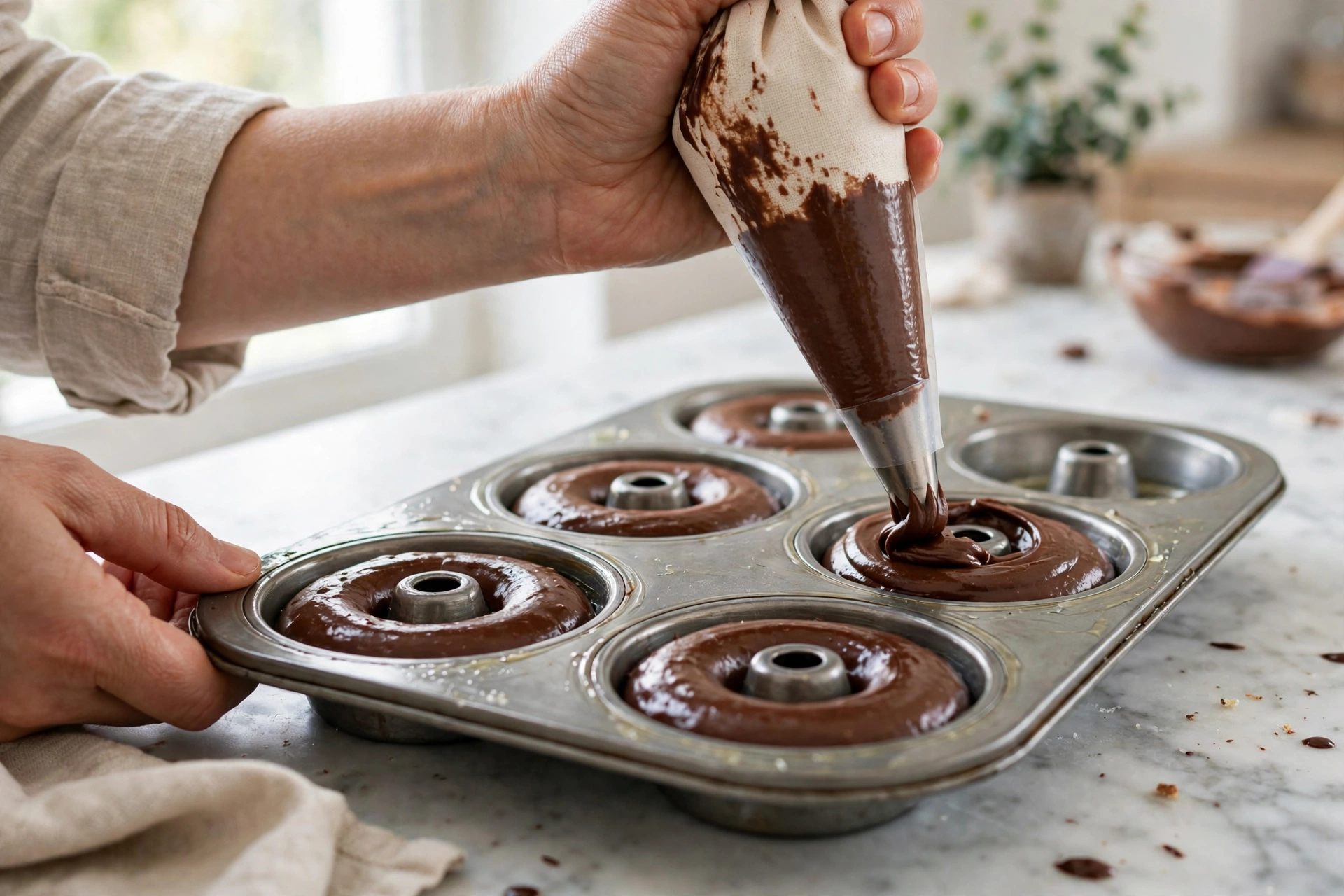
Spoon or pipe the batter into the prepared pan, filling each cavity only two-thirds full. A piping bag is the neater tool — snip the end, pipe a ring into each cavity, and the donuts come out even — but a spoon works fine if you take your time. Do not overfill: batter poured to the top rises over the centre post and bakes into a muffin with a hole that has closed up, and a donut with no hole is just a small cake. Two-thirds full, no more.
Step 6: Bake 10 to 12 minutes, then cool in the pan
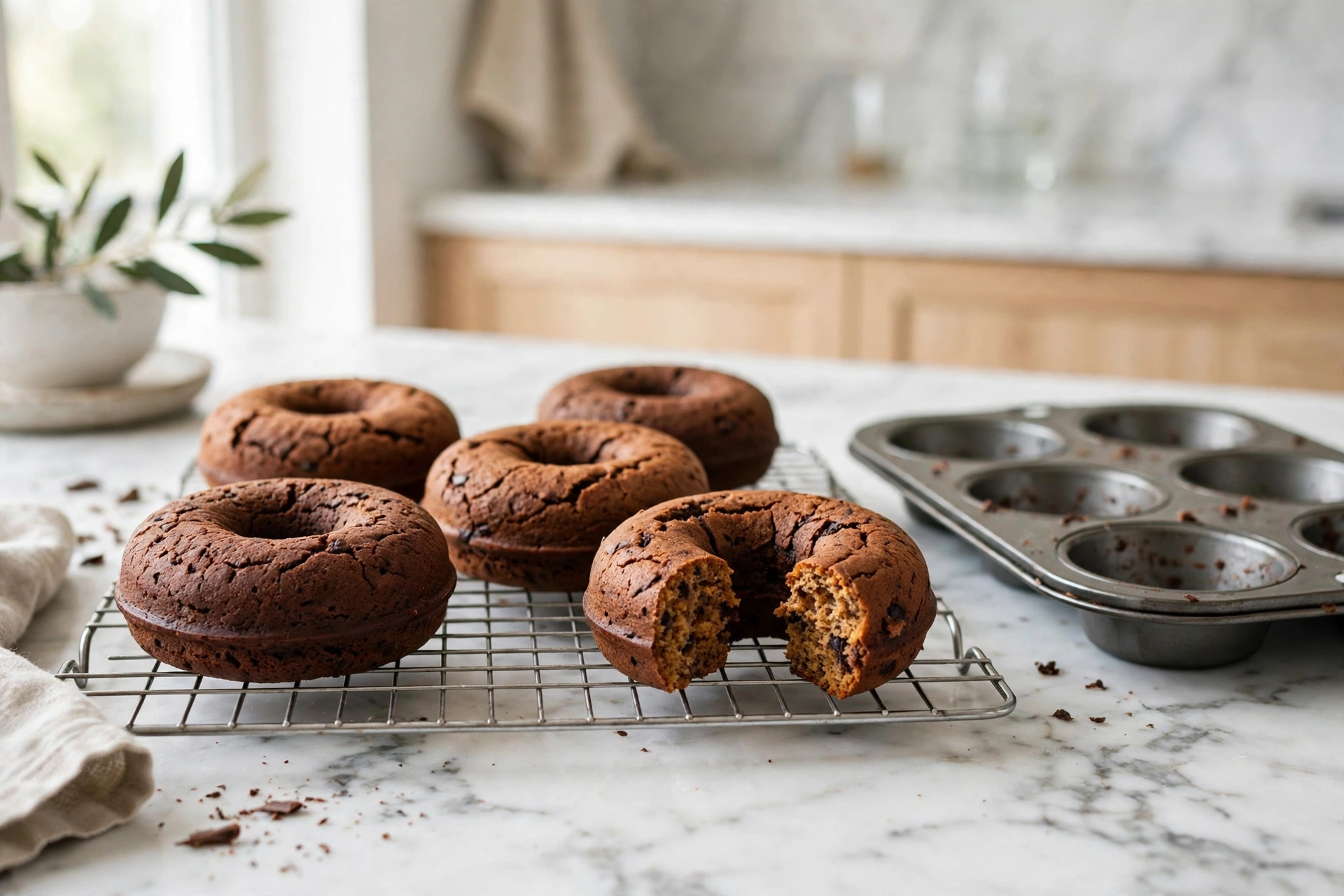
Bake for 10 to 12 minutes, until a toothpick inserted into the thickest part of a donut comes out clean. Start testing at 10 minutes — a baked donut goes from perfect to dry in two extra minutes, and the toothpick is the only honest test. The tops will look a little pale and feel springy; that is right, because the glaze covers the top anyway. Cool the donuts in the pan for 5 minutes, then turn them out onto a wire rack. Do not turn them out hot — they are fragile straight from the oven and will tear — and do not leave them in the pan longer than 5 minutes, or the steam softens the bottoms.
Step 7: Dip and set the glaze
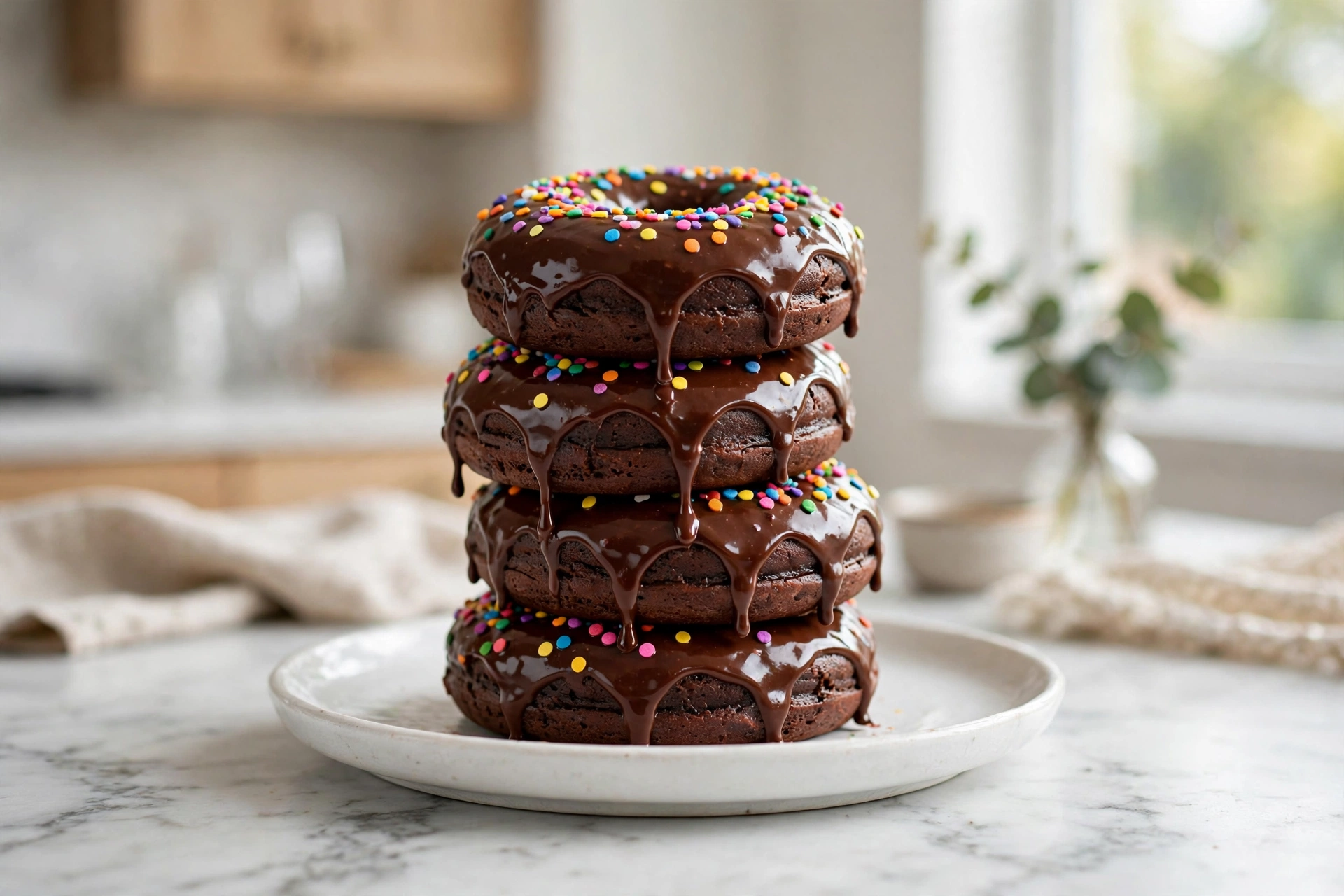
Melt the chocolate chips with the coconut oil in 25-second microwave bursts, stirring between each one, until smooth — usually three bursts after the first. Then dip the smooth top of each slightly warm donut into the glaze once, lift it straight up, and let the excess drip back into the bowl for a few seconds before you set it down. Add sprinkles now, while the glaze is still wet, and let the glaze set before serving — about 10 minutes at room temperature, or 5 minutes in the fridge if you are in a hurry. The full glaze guide, with the two mistakes that ruin it, is in the next section.
The Glaze Guide
The glaze is two ingredients and one rule: dip the donuts while they are just slightly warm, not hot. Everything that goes wrong with a chocolate glaze comes back to temperature — the temperature of the glaze, and the temperature of the donut.
Melt in 25-second bursts. Put the chocolate chips and the coconut oil in a microwave-safe bowl and heat for 25 seconds, then stir — even if the chips still look solid, they are melting from the inside. Repeat in 25-second bursts, stirring after each one, until the glaze is smooth and glossy. It usually takes three bursts. Do not run the microwave for a full minute: scorched chocolate is grainy and dull, and it will not smooth out no matter how hard you stir. If you would rather use the stove, set the bowl over a pan of barely simmering water and stir until smooth, keeping the bowl dry — one drop of water seizes a whole bowl of chocolate.
Dip once, and let it drip. Hold a donut by its sides and dip the smooth top straight down into the glaze, then lift it straight up and hold it over the bowl for a few seconds while the excess drips off. One dip is enough — a second dip doubles the glaze and makes it thick and heavy instead of shiny and thin. If the glaze looks thin and slides off, the donuts are too hot: wait until they are just slightly warm to the touch. If the glaze is already setting in the bowl before you finish, it has cooled too much — ten seconds in the microwave brings it back.
Sprinkles go on now, not later. Scatter the sprinkles over the wet glaze within seconds of dipping, while it is still glossy. Once the glaze starts to set, sprinkles bounce off it instead of sticking. Work one donut at a time — dip, sprinkle, set down — instead of dipping all twelve and then sprinkling, or the first six will already be set by the time you get back to them.
Pro Tips and Troubleshooting
Why did my donuts turn out dry?
Two causes, and both are in the method: the batter was overmixed, or the donuts were baked past 12 minutes. Stir only until just combined — a few flour streaks are fine — and start testing with a toothpick at 10 minutes. A baked donut goes from perfect to dry in two extra minutes, and there is no fixing a dry donut after the fact. If your oven runs hot, check at 9 minutes next time.
Why is my chocolate flavour pale?
The cocoa was never bloomed. Dry cocoa stirred into cold batter tastes dusty and flat, no matter how much of it you use. Whisk the cocoa into very hot water first, until it is dark and glossy, and the donuts will taste like chocolate instead of cocoa powder. The same bloom trick is what makes the site’s chocolate pancakes taste like chocolate — pancakes for the griddle, donuts for the oven, same bloom in both.
Why did my donuts stick to the pan?
The pan was under-greased, or the donuts were turned out too soon. Grease every cavity thoroughly, including the centre post, and cool the donuts in the pan for the full 5 minutes before you turn them out — straight from the oven they are too fragile and will tear, and after 5 minutes they release cleanly. If a donut still sticks, run a thin knife around the edge and the centre post before you lift it out.
Why is my glaze sliding off?
The donuts were too hot when you dipped them. A hot donut melts the glaze from underneath, and it slides straight off the top and pools on the plate. Wait until the donuts are just slightly warm to the touch — about 10 minutes on the rack — and the glaze will cling and set. If the glaze is already sliding, wipe it off, let the donut cool properly, and dip again.
Why won’t my glaze set?
Too much liquid, or no coconut oil or butter to firm it up. This glaze is chocolate chips plus coconut oil only — no milk, no cream, no water — because coconut oil is solid at room temperature and that is what makes the glaze set into a shell. If you thinned the glaze with milk, it will stay soft and sticky. Melt a fresh batch with the oil only, and it will set in about 10 minutes at room temperature.
Why did my donuts sink in the middle?
Too much batter per cavity. Fill each cavity two-thirds full, no more — overfilled donuts rise over the centre post, then collapse back down as they cool, and the middle sinks. A piping bag makes the fill level easy to judge; with a spoon, fill each cavity a little less than you think it needs, because the batter rises a lot in ten minutes.
Variations
The nutmeg bakery version. Add 1/4 teaspoon of ground nutmeg to the dry ingredients — Sally’s Baking Addiction calls it the bakery donut flavour, and she is right: nutmeg is the quiet note that makes a chocolate donut taste like it came from a bakery case instead of a home oven. Do not skip it if you want the bakery version, and do not add more — a quarter teaspoon is enough, and more turns it into a spice donut.
Peanut-butter glaze. Swap the chocolate glaze for a peanut-butter one: warm 1/2 cup smooth peanut butter with 2 tablespoons of butter until it pours, then dip the same way. The peanut-butter glaze sets softer than the chocolate one, so let it set in the fridge for 10 minutes before serving, and add chopped peanuts instead of sprinkles.
Double chocolate. Stir 1/3 cup of chopped dark chocolate into the batter along with the mini chips, and use a dark chocolate glaze. It is the richest version on this page, and the one to make when the donuts are the dessert rather than the breakfast — the chopped chocolate melts into pockets inside the crumb, so every bite has a soft, melted middle.
Mini donuts. The same batter works in a mini donut pan — fill the cavities two-thirds full, the same as the full size, and start checking at 8 minutes, because the smaller donuts bake faster. Mini donuts are the party version: a batch makes about 24, and they disappear faster than the full-size ones, so make two batches if there are children in the house.
Dairy-free note. This is a variation, not the base: swap the butter for coconut oil, the buttermilk for oat milk soured with a tablespoon of lemon juice, and use dairy-free chocolate chips in the batter and the glaze. The crumb will be a little less tender and the glaze a little softer, but the donuts will still bake and set — and the bloom trick matters even more here, because dairy-free chocolate is milder and needs the help.
Serving it. Donuts are a coffee food, and these are no exception: serve them warm from the rack with a cup of coffee, or beside a scoop of our chocolate ice cream — a warm donut beside a cold scoop is the best thing on this site after the donut itself. For a dessert table, stack them on a plate with a bowl of extra sprinkles beside it and let people add their own.
Serving and Storage
Serve the donuts the day they are made, while the glaze is set and the crumb is still soft — they are at their best within a few hours of the oven. Stack them on a plate, glaze side up, and do not stack them glaze to glaze, or the glaze will stick and peel off when you pull them apart.
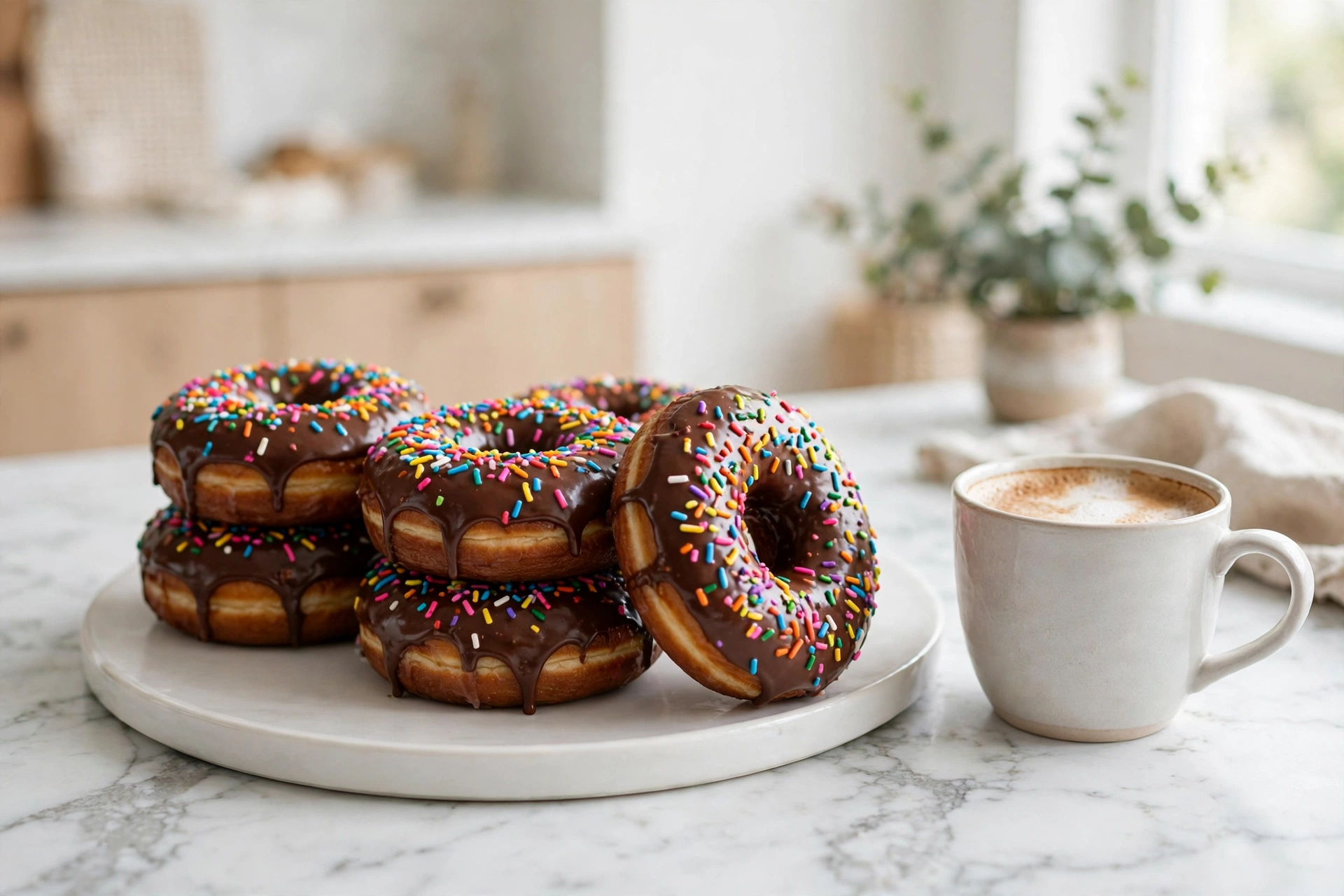
Unglazed donuts keep 2 days in an airtight container at room temperature, or freeze for up to 2 months in a freezer bag with the air pressed out — glaze them after thawing, never before freezing, because a frozen glaze cracks and peels. Glazed donuts are best the same day: the glaze softens in the fridge, so do not refrigerate glazed donuts, and do not promise a next-day donut that tastes like a fresh one. If you must keep glazed donuts overnight, leave them covered on the counter, not in the fridge, and eat them for breakfast. For the cold version of this chocolate, our chocolate pie recipe is pie for dessert, donuts for breakfast — the same dark chocolate, a cold slice instead of a warm ring.
Frequently Asked Questions
Do I need a donut pan?
Yes, for the shape. A muffin tin makes chocolate muffins, not donuts — the batter is the same, but the ring shape is what bakes fast and evenly, and the bake time changes in a muffin tin, so the 10 to 12 minutes in this recipe does not apply. A 12-count donut pan is inexpensive and it is the only piece of equipment this recipe needs that you might not own; once you have it, the whole bakery-case line on this site — donuts, then muffins, then loaves — opens up.
Why bloom the cocoa in hot water?
Dry cocoa tastes dusty; hot water releases its flavour. Cocoa powder needs heat and liquid to give up its chocolate taste, and whisking it into very hot water before it meets the flour is the thirty-second step that makes these donuts taste like chocolate instead of cocoa powder. It is the same trick as the pancakes on this site, and it works with natural or Dutch-process cocoa.
Why did my donuts turn out dry?
Overmixed batter, or baked past 12 minutes. Stir only until just combined — a few flour streaks are fine — and start testing with a toothpick at 10 minutes. A baked donut goes from perfect to dry in two extra minutes, so pull them the moment the toothpick comes out clean, even if the tops look a little pale.
Why is my glaze sliding off?
The donuts were too hot when you dipped them. A hot donut melts the glaze from underneath and it slides straight off. Wait until the donuts are just slightly warm to the touch — about 10 minutes on the rack — and the glaze will cling and set into a shiny shell.
Why won’t my glaze set?
Too much liquid, or no coconut oil or butter to firm it up. This glaze is chocolate chips plus coconut oil only — no milk, no cream, no water — because coconut oil is solid at room temperature and that is what makes the glaze set. Melt a fresh batch with the oil only, and it will set in about 10 minutes.
Can I make the batter ahead?
No — bake it immediately. The baking soda starts working the moment the wet ingredients meet the dry, and batter that sits loses its lift: the donuts come out flat and dense. Measure everything first, mix, fill the pan, and get it in the oven. The whole prep takes 15 minutes, so there is no need to hold it.
Can I freeze them?
Yes — unglazed, for up to 2 months in a freezer bag with the air pressed out. Thaw them at room temperature, then glaze after thawing, never before freezing, because a frozen glaze cracks and peels. Glazed donuts do not freeze well and are best eaten the same day.
More Chocolate Recipes
If these donuts are the first thing you have made from Chocolacious, the rest of the collection is waiting: the chocolate bark recipe for the cold version of this chocolate, the chocolate pancakes recipe for the hot breakfast version of the same cocoa bloom, the chocolate pie recipe for the table, and the chocolate ice cream recipe for the cold scoop beside a warm donut.
This chocolate donuts recipe is the first baked donut on the site, and the first recipe that needs a donut pan — the start of the bakery-case line, with muffins and loaves to come. Twelve donuts, 27 minutes, no yeast, no frying: bloom the cocoa in hot water, fold the wet into the dry and stop early, fill the pan two-thirds full, bake 10 to 12 minutes, and dip the slightly warm donuts once in a glaze that sets into a shiny shell. That is the whole secret, and once you have made it this way, the dry donuts, the pale chocolate and the glaze on the plate are behind you for good.
Chocolate Donuts Recipe
Ingredients
Method
- Preheat the oven to 350°F (175°C) and grease and flour a 12-count donut pan, or spray it well with baking spray — grease every cavity, including the centre post.
- Whisk the flour, both sugars, cornstarch, baking powder, baking soda and salt together in a large bowl.
- Whisk the cocoa into the very hot water until smooth, then whisk in the melted butter, egg, vanilla and buttermilk.
- Pour the wet mixture into the dry and stir only until just combined, then fold in the mini chocolate chips last.
- Spoon or pipe the batter into the prepared pan, filling each cavity only two-thirds full.
- Bake for 10 to 12 minutes until a toothpick comes out clean, then cool 5 minutes in the pan and turn out onto a wire rack.
- Melt the chocolate chips with the coconut oil in 25-second microwave bursts, stirring between each one, until smooth; dip the smooth top of each slightly warm donut once, let the excess drip, add sprinkles if using, and let the glaze set before serving.