Last updated on November 14, 2026
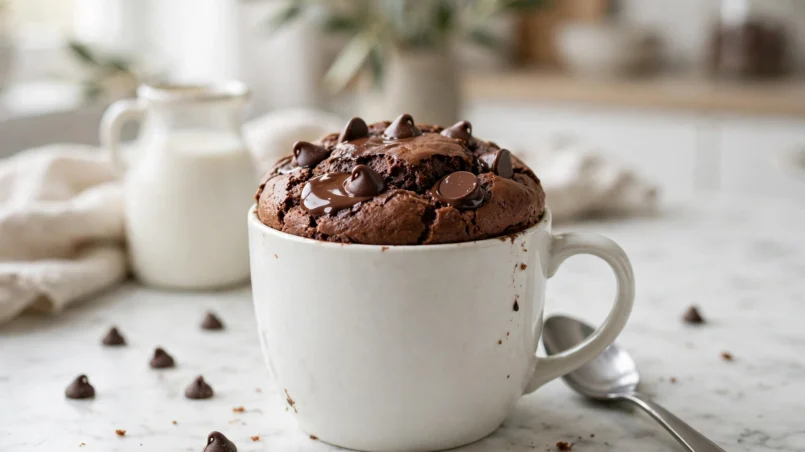
Some nights, you do not want a whole cake. You want one warm, gooey, deeply chocolatey cake, eaten straight from the mug with a spoon, about five minutes from now. That is exactly what this eggless chocolate mug cake is for. I have baked chocolate cake professionally for years, and this little mug cake is the recipe I turn to when the craving hits at 10 pm and turning on the oven feels like too much commitment. It mixes right in the mug — no bowls, no mixer, no eggs — and one minute in the microwave turns it into a soft, tender, molten-centered cake that tastes like it took far more effort than it did.
The best part is that skipping the egg is not a compromise here, it is the reason this cake works so well. A whole egg is simply too much for a single small cake and makes mug cakes rubbery and eggy, so leaving it out keeps the crumb soft and cake-like. This recipe sits right alongside our eggless brownies and our eggless chocolate cake in the eggless family — the same pantry-staple approach, the same reliable result, just scaled down to one perfect serving. If you loved our eggless chocolate chip cookies, this is the five-minute version for nights when only cake will do.
Table of Contents
- Why This Recipe Works
- Ingredients
- How to Make Eggless Chocolate Mug Cake
- Pro Tips for the Best Results
- Substitutions and Variations
- How to Store
- Frequently Asked Questions
- Nutrition
- More Recipes You Will Love
Why This Recipe Works
A mug cake lives or dies on its ratios, because there is nowhere for a mistake to hide in a single serving. Here is why this one works, every time:
- No egg means a softer crumb. In a full-size cake, eggs provide structure. In a mug cake, one egg is far too much protein for such a small amount of batter, and it turns the cake rubbery in the microwave. Skipping the egg entirely keeps the texture soft, tender, and genuinely cake-like.
- Baking powder does all the lifting. Just 1/4 teaspoon of baking powder is enough to make this single serving rise tall and fluffy in about a minute. It is the only leavener you need, and the small amount means there is no bitter aftertaste.
- Oil keeps it moist. A tablespoon of neutral oil does the work butter would do in a bigger cake, but it stays liquid as the cake cools, so the crumb stays soft even if you eat it slowly. It also means no melting butter first — one less step.
- Chocolate chips in two places. Half the chips go into the batter, where they melt into little molten pockets. The other half goes on top, where it melts into a glossy chocolate cap. That double dose is what makes a one-minute cake taste indulgent instead of plain.
- The mug is the bowl. Everything mixes in the same mug you eat from, so there is exactly one thing to wash. Use a mug of at least 12 ounces (350 ml), because the cake rises high while it cooks and a small mug will overflow.
None of this is complicated. It is simply the right amounts of the right things, in the right order, for exactly one serving.
Ingredients
Everything here is a pantry staple, and you probably have all of it already. Measure with proper measuring spoons, not a dinner spoon — mug cake ratios are small, and a heaped tablespoon of flour is enough to throw the whole thing off.
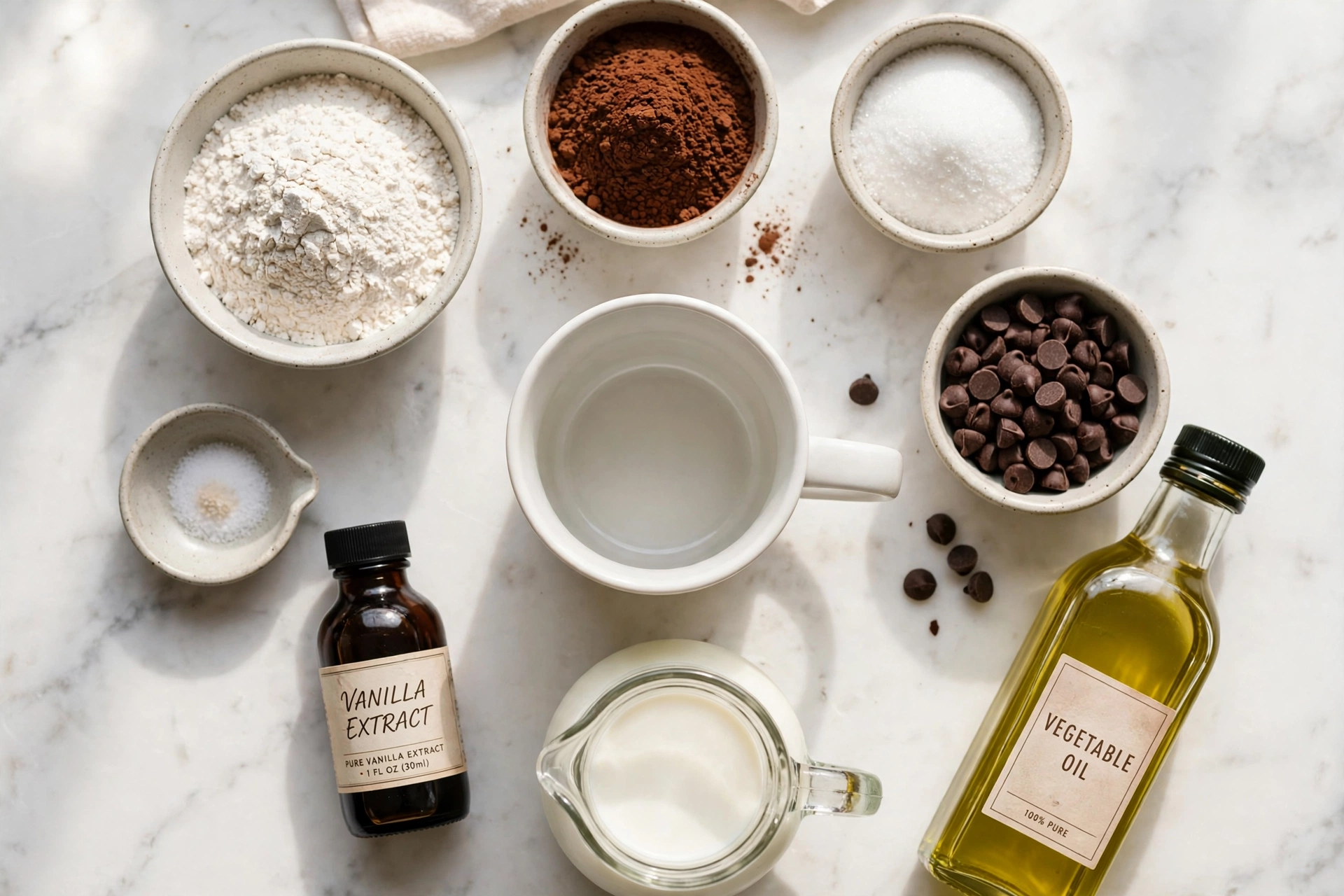
- 3 tablespoons (24g) all-purpose flour, spooned and leveled — the structure of the cake. Spoon the flour into the measuring spoon and level it off; a heaped spoon makes a dry, dense cake.
- 1 tablespoon (5g) unsweetened cocoa powder — Dutch-process cocoa gives the darkest color and smoothest flavor, but natural cocoa works too. Sift it into the mug if yours is lumpy.
- 2 tablespoons (25g) granulated sugar — sweetens the cake and keeps the crumb tender. Adjust up or down by a teaspoon to taste, but do not leave it out; sugar is part of the structure here.
- 1/4 teaspoon baking powder — the only leavener, and the reason the cake rises in the microwave. Check that it is fresh; baking powder loses strength after about 6 months open.
- A pinch of salt — salt does not make cake salty; it makes the chocolate taste more like chocolate. Do not skip it.
- 3 tablespoons (45ml) milk, at room temperature — whole milk gives the richest crumb. Any milk works, including plant milk.
- 1 tablespoon (15ml) vegetable oil — any neutral oil such as canola or sunflower. It is what keeps the cake moist.
- 1/4 teaspoon vanilla extract — rounds out the chocolate flavor. Use real vanilla if you have it.
- 2 tablespoons semi-sweet chocolate chips, divided — half stirred into the batter, half sprinkled on top. Mini chips work beautifully here too.
How to Make Eggless Chocolate Mug Cake
The whole thing takes about 5 minutes, and most of that is the microwave doing the work. Read through the steps once before you start, because the order matters: the dry ingredients get mixed first, the wet ingredients go in second, and the chips go in last.
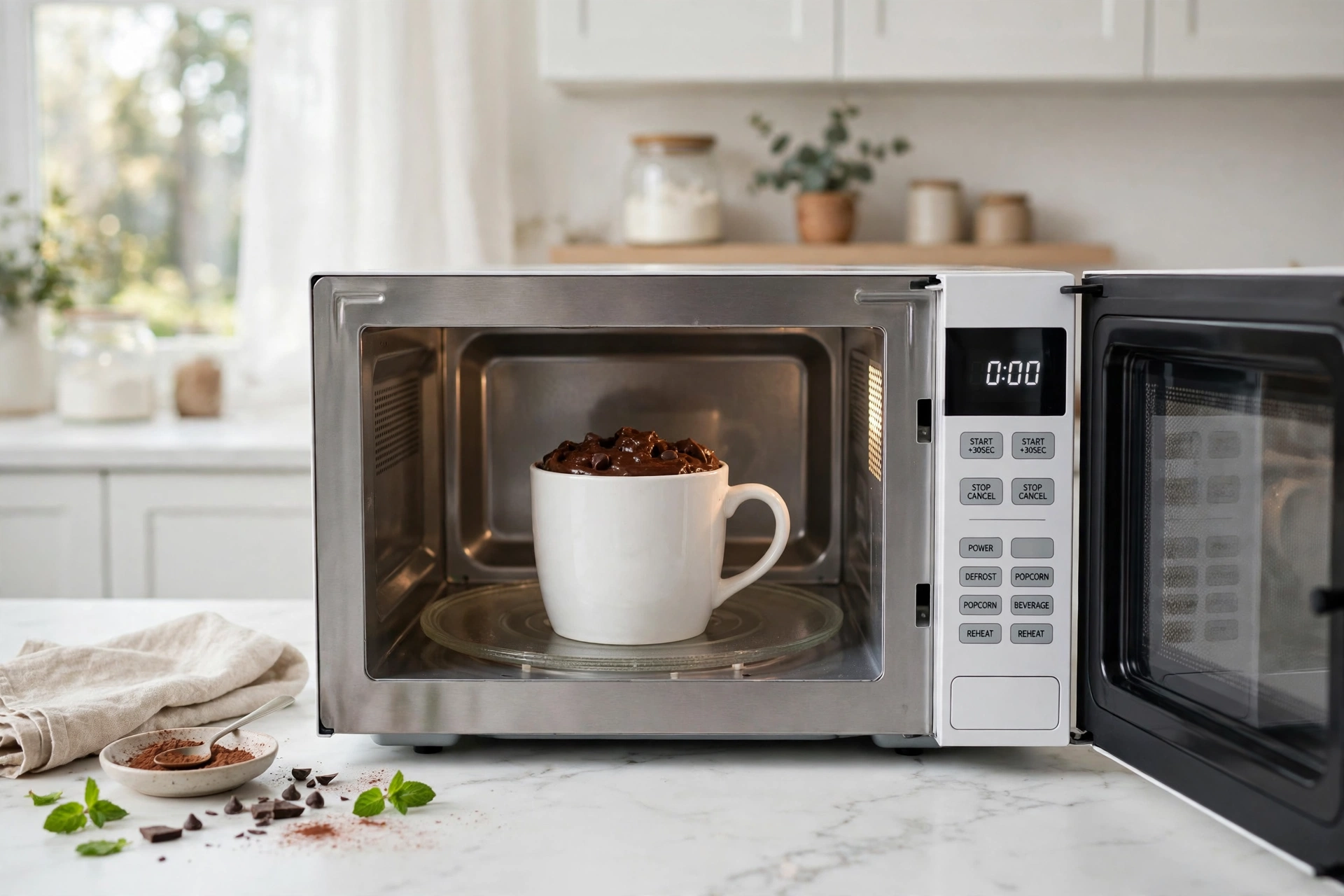
- Pick the right mug. Use a microwave-safe mug of at least 12 ounces (350 ml) with straight sides. A small mug will overflow as the cake rises, and a very wide mug will cook the cake too fast and dry it out.
- Mix the dry ingredients. In the mug, stir together the flour, cocoa powder, sugar, baking powder, and salt with a fork or a small spoon until completely combined. Break up any cocoa lumps now — they will not dissolve later.
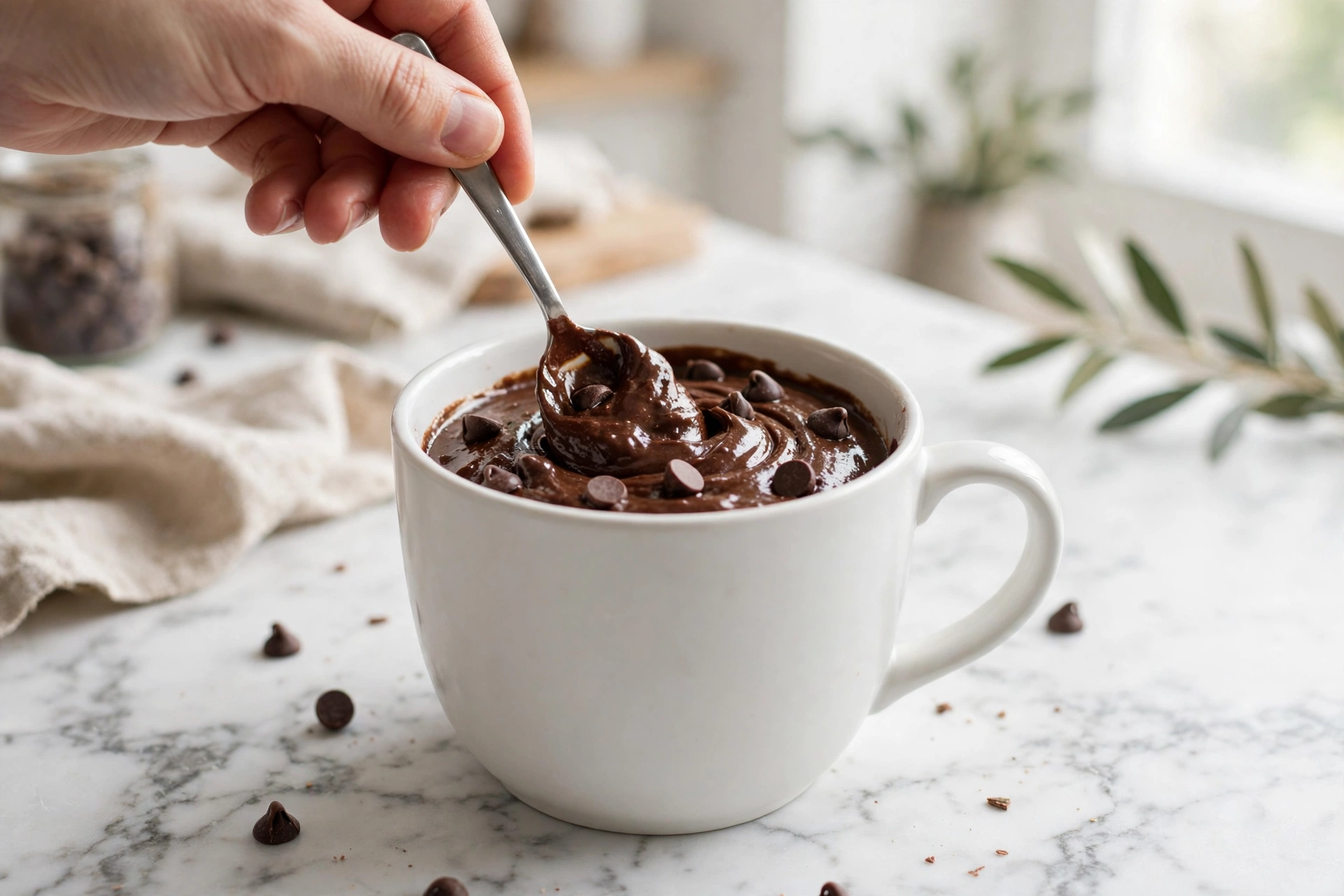
- Add the wet ingredients. Pour in the milk, oil, and vanilla extract. Stir well until the batter is smooth and no dry flour is visible at the bottom or the sides of the mug. Scrape the bottom of the mug with the spoon to catch any hidden flour.
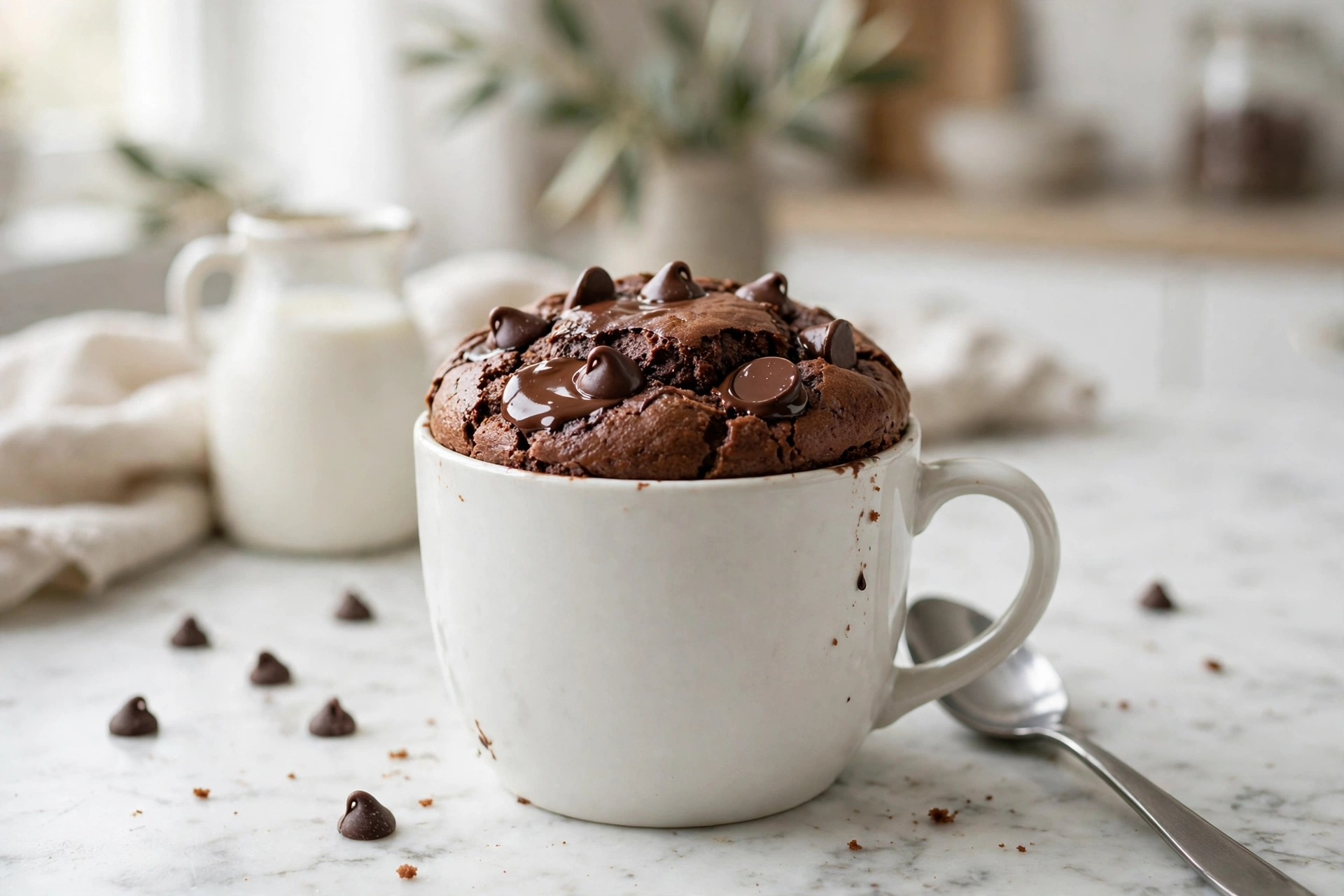
- Add the chocolate chips. Stir 1 tablespoon of the chocolate chips into the batter, then sprinkle the remaining 1 tablespoon over the top. The chips on top melt into a glossy chocolate cap while the cake cooks.
- Microwave for 60 to 75 seconds. Microwave on high for 60 seconds first, then check. The cake is done when it has risen and the top looks set but still soft — a toothpick in the center should come out with a few moist crumbs, not wet batter. If it needs more time, add 10 seconds at a time. Do not go past 90 seconds; an overcooked mug cake turns dry and rubbery in seconds.
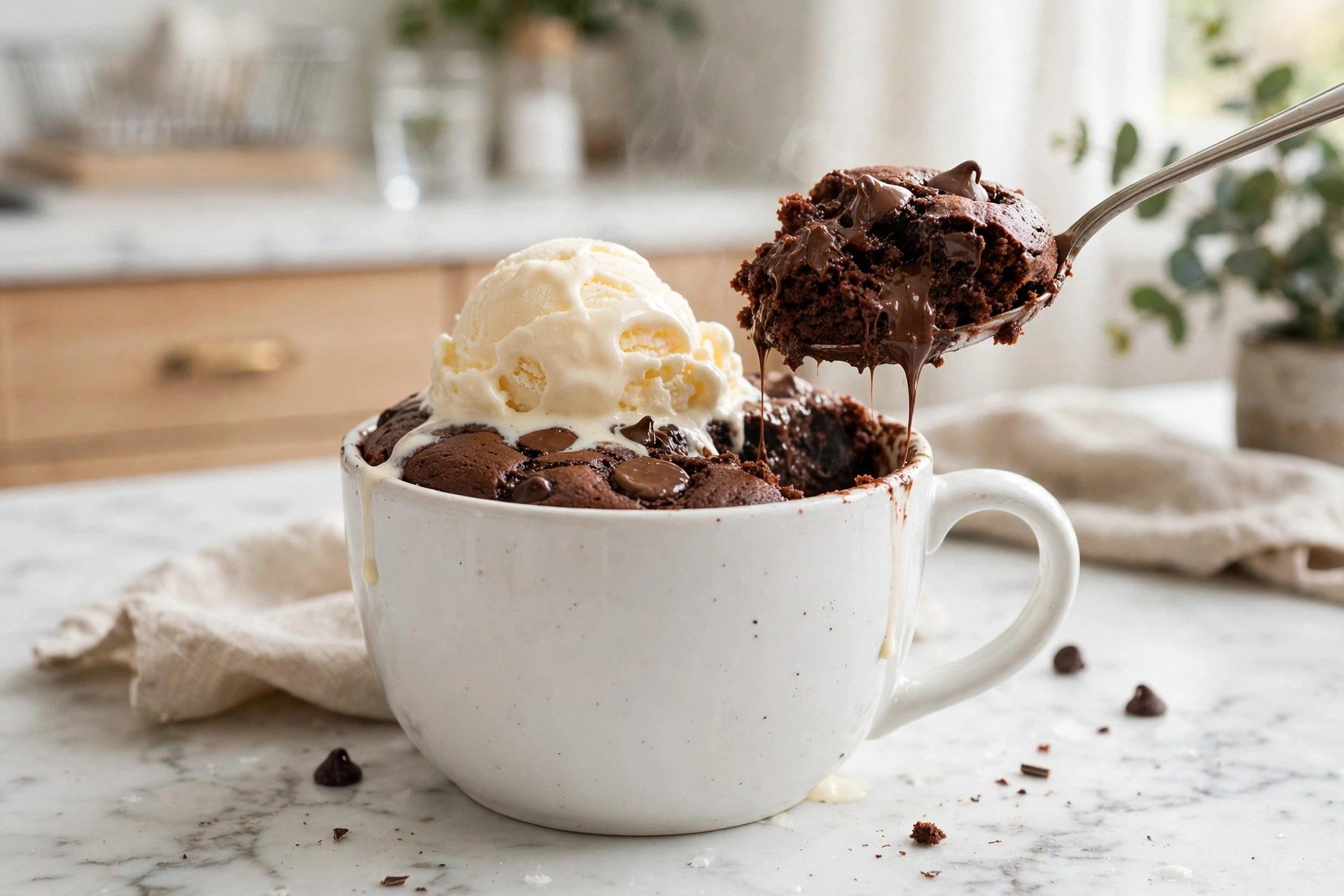
- Rest for 1 minute, then eat. Let the cake sit for 1 minute after the microwave stops. It is still cooking from residual heat, and the center sets into that perfect soft, gooey texture. Eat it straight from the mug while it is warm — that is the whole point of a mug cake.
Pro Tips for the Best Results
- Start at 60 seconds, not 75. Every microwave is different, and 15 seconds is the difference between gooey and rubbery in a mug cake. Check at 60 seconds and add 10-second bursts only if the top still looks wet. Remember the cake keeps cooking for a minute after the microwave stops.
- Do not overmix. Stir just until the batter is smooth and the flour disappears. Overmixing develops the gluten in the flour and gives you a tough, chewy cake instead of a tender one.
- Use a big enough mug. A 12-ounce mug is the minimum. The cake rises high while it cooks, and a small mug means batter bubbling over the sides and onto the microwave floor. Straight sides cook more evenly than a tapered mug.
- Scrape the bottom. Dry flour hides at the bottom of the mug and along the sides, and it will not mix itself in the microwave. Run your spoon along the bottom and the edges before you cook it.
- Measure the flour properly. Spoon the flour into the tablespoon and level it off. A heaped spoon is the single most common reason mug cakes come out dry and dense.
- Let it rest that one minute. I know it is tempting to dig in the second the microwave beeps, but the center is still setting. One minute of patience gives you a soft, gooey center instead of a wet, underdone one — and it stops the cake from burning your tongue.
- Serve it warm, in the mug. Mug cake is at its best in the first 10 minutes. A scoop of vanilla ice cream or a dollop of whipped cream on top, melting into the warm cake, is the move. Our chocolate ganache drizzled over the top is wonderful too, if you happen to have some made.
Substitutions and Variations
This recipe is forgiving in some places and strict in others. Here is what I know works:
- Milk: Any milk works — whole, low-fat, oat, almond, or soy. Whole milk gives the richest crumb, but plant milk is a fine swap with no other changes.
- Oil: Any neutral oil works: canola, sunflower, or light vegetable oil. Melted butter also works in the same amount, but the cake will firm up a little more as it cools. Coconut oil works too, melted first.
- Sugar: Granulated sugar, caster sugar, or coconut sugar all work. Brown sugar makes the cake a touch moister and adds a caramel note. I would not use a liquid sweetener like honey here, because it changes the moisture balance in such a small batter.
- Cocoa powder: Dutch-process gives the darkest, smoothest result. Natural cocoa works, but the cake will be a little lighter in color and slightly more acidic.
- Peanut butter center: Drop a teaspoon of peanut butter, Nutella, or jam into the middle of the batter before microwaving. It melts into a gooey molten center — my favorite variation.
- Mocha mug cake: Replace 1 tablespoon of the milk with strong brewed coffee, or add 1/2 teaspoon of instant espresso powder with the dry ingredients. You will not taste coffee; it just makes the chocolate taste darker.
- Double it: Want two servings? Make two separate mugs rather than doubling the recipe in one big mug. A doubled batter in one mug cooks unevenly — the outside dries out before the center sets.
- Gluten-free: I have not tested a gluten-free version of this exact recipe, so I will not promise one. A 1-to-1 gluten-free flour blend should behave similarly in theory, but test it in a small batch first.
How to Store
Honestly, eat it now. A mug cake is a make-it-and-eat-it dessert — it is at its best in the first 10 minutes, warm from the microwave. It does not store well, and it was never meant to.
Room temperature: If you must keep it, cover the mug with plastic wrap and keep it at room temperature for up to a few hours. Warm it for 10 to 15 seconds in the microwave before eating to bring back some of the softness.
Refrigerator: Covered and refrigerated, it will keep for up to 1 day, but the texture firms up and dries out. Reheat for 15 to 20 seconds in the microwave. I would not freeze a mug cake — it takes 5 minutes to make a fresh one, and a fresh one is always better.
Frequently Asked Questions
Why is my eggless chocolate mug cake rubbery?
Almost always overcooking. A mug cake goes from perfect to rubbery in about 15 seconds, because the microwave keeps cooking the small batter very fast. Start at 60 seconds, add 10 seconds at a time only if the top still looks wet, and never go past 90 seconds. Remember the cake keeps cooking for a minute after the microwave stops, so pull it when the top looks just set, not fully firm.
Can I make eggless chocolate mug cake without a microwave?
Yes, but it takes longer and it is a different dessert. Pour the batter into a small oven-safe ramekin and bake at 350°F (175°C) for 12 to 15 minutes, until a toothpick comes out with moist crumbs. The texture will be closer to a tiny baked cake than a gooey mug cake, but it is still delicious. If you want a proper baked chocolate cake, our chocolate cake recipe is the one to make.
What size mug should I use for a mug cake?
At least 12 ounces (350 ml), microwave-safe, with straight sides. The cake rises high while it cooks, so a small mug will overflow. A very wide, shallow mug cooks too fast and dries the cake out. Your everyday large coffee mug is usually the right size.
Why did my mug cake overflow in the microwave?
Either the mug was too small, or the batter was overmixed, or the baking powder was too generous. Use a 12-ounce mug, measure the baking powder level at 1/4 teaspoon, and stir just until combined. If your microwave runs hot, try 50 seconds first and add time in 10-second bursts.
Can I make this eggless chocolate mug cake dairy-free?
Yes. Use oat, almond, or soy milk in place of the dairy milk, and dairy-free chocolate chips. The recipe has no butter or yogurt, so the milk and the chips are the only dairy to swap, and the result is just as good.
Can I double this mug cake recipe?
Make two separate mugs instead of doubling the batter in one mug. A doubled batter in one large mug cooks unevenly — the edges dry out before the center sets. Two mugs, cooked one at a time, each for 60 to 75 seconds, gives you two perfect cakes.
How do I know when my mug cake is done?
The top should look set but still soft, and the cake should have risen well above the rim of the mug. A toothpick in the center should come out with a few moist crumbs, not wet batter and not completely clean. If the top still looks wet and shiny, give it 10 more seconds. If the cake has sunk or looks dry, it went too long — next time, pull it 10 seconds earlier.
Nutrition (Per Mug Cake, Approximate)
Calories: 470 | Carbohydrates: 62g | Protein: 5g | Fat: 24g | Sugar: 39g
Nutrition values are estimated for 1 mug cake and may vary based on exact ingredients used.
More Recipes You Will Love
| Recipe | Category |
|---|---|
| Eggless Chocolate Chip Cookies | Eggless Desserts |
| Eggless Brownies | Eggless Desserts |
| Eggless Chocolate Cake | Eggless Desserts |
| Chocolate Cupcake Recipe | Chocolate Cakes |
Eggless Chocolate Mug Cake
Ingredients
Method
- Use a microwave-safe mug of at least 12 ounces (350 ml) with straight sides.
- Stir together the flour, cocoa powder, sugar, baking powder and salt in the mug until completely combined.
- Add the milk, oil and vanilla; stir until smooth with no dry flour at the bottom or sides of the mug.
- Stir in 1 tablespoon of the chocolate chips, then sprinkle the remaining 1 tablespoon on top.
- Microwave on high for 60-75 seconds, until the cake has risen and the top looks set but still soft. Add 10 seconds at a time if needed; never go past 90 seconds.
- Rest for 1 minute, then eat warm straight from the mug.