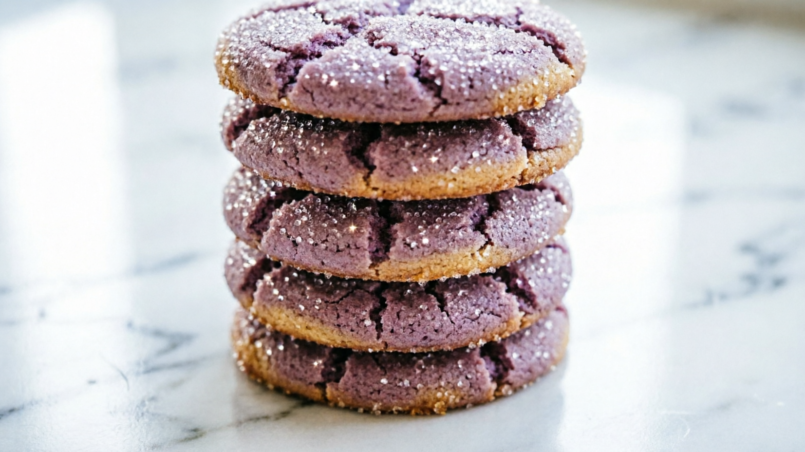
The first time someone handed me an ube cookie, I figured they’d gone a little heavy on the food coloring. Turns out the color was only part of the story. Ube is a purple yam, and the flavor is hard to pin down. It’s sweet, a bit nutty, and somewhere between vanilla and coconut, but not quite either one. Most people take a bite, pause, and ask what’s in it.
These ube cookies are soft in the middle, lightly crisp at the edges, and they come together in one bowl. There’s one catch, and it’s about the color, so I’ll get to that below. It’s the kind of thing most recipes skip and then you find out the hard way.
Table of Contents
- What Is Ube?
- Why This Recipe Works
- A Quick Word About the Color
- Ingredients
- How to Make Ube Cookies
- Pro Tips
- How to Store and Freeze
- Frequently Asked Questions
- Nutrition
- More Recipes You’ll Love
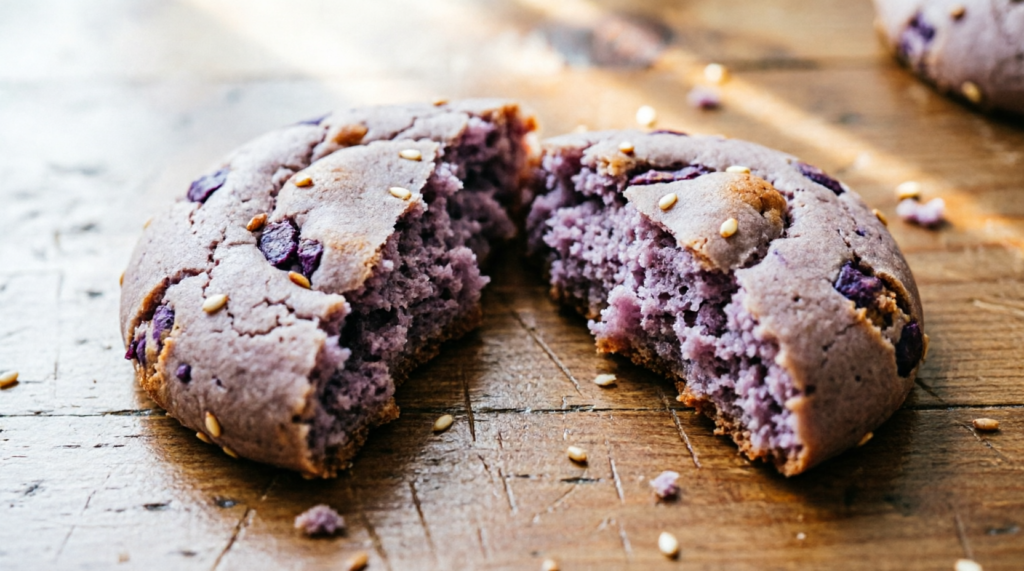
What Is Ube?
Ube (say it “OO-beh”) is a purple yam. Its botanical name is Dioscorea alata, and it’s most closely tied to Filipino cooking, where it shows up in cakes, ice cream, and all kinds of desserts.
People often mix it up with taro, which is also purple-ish and shows up in bubble tea. They’re different plants, and the flavors aren’t the same, so check the label when you shop. You want ube, or “purple yam,” not taro.
Why This Recipe Works
I use ube powder and ube extract together. The powder brings the actual yam flavor, and the extract gives the dough a bigger punch of both flavor and color. I skipped ube halaya (the jam) on purpose. Brands vary a lot in sweetness and moisture, so swapping it in tends to make the dough unpredictable.
The recipe also uses one whole egg plus an extra yolk. Ube powder is dry and starchy, and it soaks up moisture much like flour does. The extra yolk keeps the center soft and chewy and keeps the dough from turning crumbly. And I cut the salt to ½ teaspoon, because a full teaspoon is a lot in a cookie this sweet.
A Quick Word About the Color
Ube’s purple comes from anthocyanins, the same type of pigment that colors blueberries and red cabbage. These pigments are sensitive. Their color shifts with pH, from red in acidic conditions toward blue and green as things get more alkaline. Baking soda is alkaline, so it can nudge your purple toward a bluer or greyer shade.
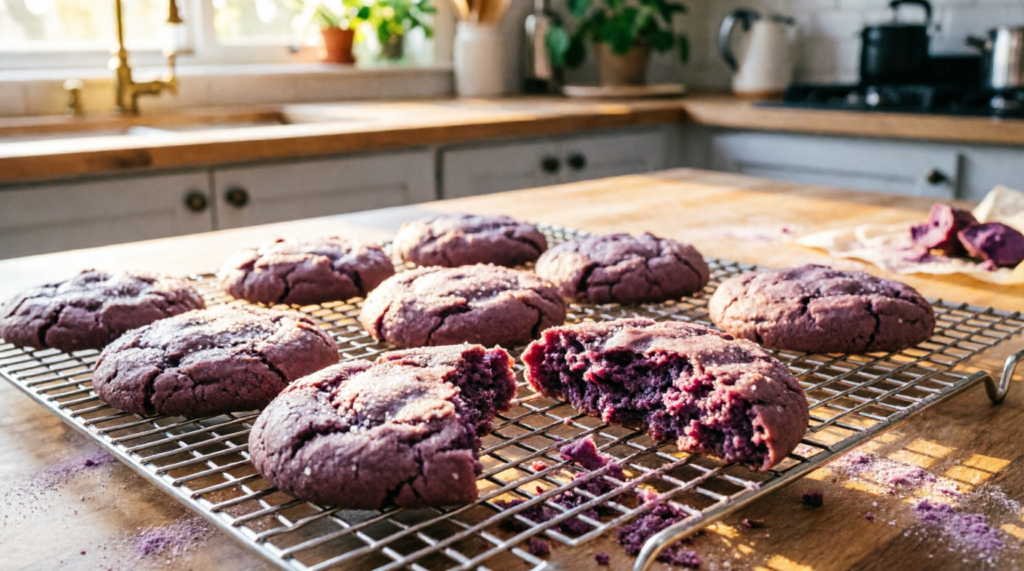
Heat matters too. Research on purple yam pigments notes that anthocyanins can break down during the processing of yam-based foods, which is why baked ube treats often look a bit softer than the raw dough did. So if your cookies come out a muted lavender instead of a neon purple, that’s normal. It’s chemistry, not a mistake. Many ube extracts also contain added color, so brighter cookies usually come from the extract, not the powder.
Ingredients
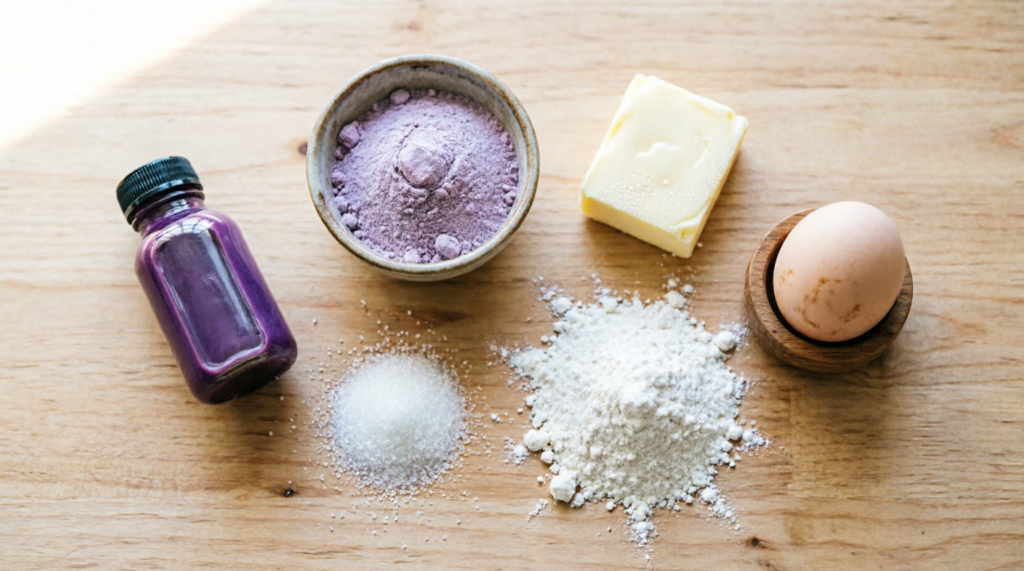
- 1 cup (226g) unsalted butter, softened
- 1 cup (200g) granulated sugar, plus 3 tablespoons for rolling
- 1 large egg, plus 1 egg yolk, at room temperature
- 1 tsp vanilla extract
- 2 tsp ube extract
- 2 ¼ cups (280g) all-purpose flour
- 2 tbsp ube powder (look for 100% purple yam, with no added milk powder or sugar)
- ½ tsp baking soda
- ½ tsp fine salt
Where to find ube powder and extract: well-stocked Asian supermarkets, especially Filipino grocery stores, usually carry both near the baking supplies.
How to Make Ube Cookies
- Preheat your oven to 350°F (175°C) and line two baking sheets with parchment paper.
- Beat the butter and sugar together for about 3 minutes, until pale and fluffy.
- Add the egg, egg yolk, vanilla, and ube extract. Mix until smooth.
- In a separate bowl, whisk the flour, ube powder, baking soda, and salt. Add this to the butter mixture and mix just until no dry streaks remain.
- Check the dough. It should hold together when you squeeze a bit in your hand. If it feels crumbly, add 1 teaspoon of milk at a time until it comes together.
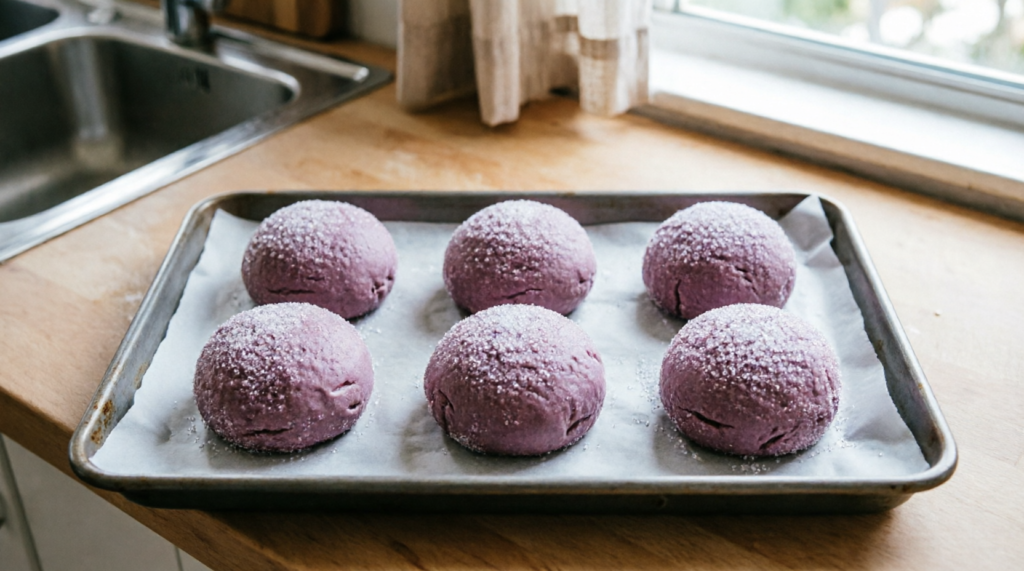
- Put the extra 3 tablespoons of sugar in a small bowl. Scoop the dough into balls (about 1½ tablespoons each), roll each in the sugar, and place them 2 inches apart on the trays.
- Bake one tray at a time for 10 to 12 minutes, until puffed and set around the edges.
- Let them cool on the tray for 10 minutes. They’ll sink a little as they cool, and that’s what you want. Then move them to a wire rack.
Pro Tips
- Bake one tray at a time. It gives you more even cookies than cramming two trays in the oven.
- If your kitchen is warm and the dough feels soft, chill the scooped balls for 20 minutes before baking so they hold their shape better.
- Roll the dough in sugar right before baking, not before. The sugar creates that thin, crackly top.
- Brands of ube extract vary in strength. Start with 2 teaspoons, taste a tiny bit of the dough, and adjust next time if you want a stronger flavor.
- If you like coconut with your purple, try our Coconut Cookies Recipe next. The flavors pair well.
How to Store and Freeze
Room temperature: Keep in an airtight container for up to 3 days.
Freezing the dough: Scoop into balls and freeze on a tray until solid, then move to a freezer bag for up to 1 month. Don’t roll in sugar until you’re ready to bake. Let the balls sit out for about 10 minutes, roll them, and bake, adding a minute or two to the time.
Frequently Asked Questions
Can I use ube halaya (ube jam) instead of powder and extract?
You can try, but it won’t be a straight swap. Halaya adds sugar and moisture, so the dough will be softer and sweeter and the recipe would need rebalancing. I’d treat it as a separate recipe rather than a substitution.
Why did my cookies turn grey or blue?
Ube’s pigments shift toward blue and grey in alkaline conditions, and baking soda is alkaline. A slightly bluer shade is normal. See the color section above for the full explanation.
Can I use taro powder instead of ube powder?
No, they’re different plants with different flavors. Look for powder labeled 100% purple yam.
Do I have to roll the cookies in sugar?
No. The sugar is mostly for texture. It gives the outside a thin, crisp, sparkly finish, but the cookies still taste great without it.
Do you have another colorful cookie?
Yes, our Birthday Cake Cookies are full of sprinkles and just as easy.
Nutrition (Per Cookie, Approximate)
Calories: 185 | Carbohydrates: 23g | Protein: 2g | Fat: 10g | Sugar: 12g
Nutrition values are estimated and may vary based on exact ingredients used.
More Recipes You’ll Love
| Recipe | Category |
|---|---|
| Coconut Cookies Recipe | Classic Cookies & Holiday |
| Birthday Cake Cookies | Classic Cookies & Holiday |
| Cowboy Cookie Recipe | Classic Cookies & Holiday |