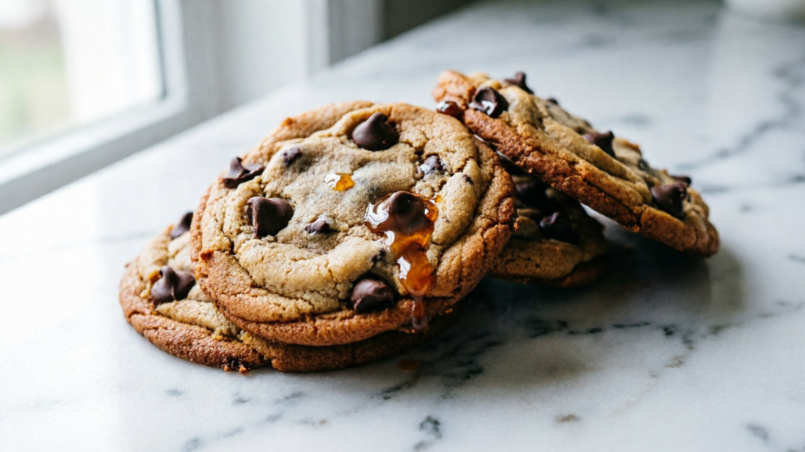
I’ve baked chocolate chip cookies professionally for years, and I’ll admit — the first time a recipe called for water instead of eggs, I was skeptical too. But after testing this eggless chocolate chip cookies recipe more than a dozen times in my own kitchen, I can tell you it genuinely works. These come out soft, chewy, with golden crisp edges, and nobody who’s tried them has ever guessed there’s no egg in the dough.
This is one of those recipes I keep coming back to — whether I’ve simply run out of eggs, I’m baking for someone with an egg allergy, or I just want a cookie that stays soft for days. If you love our Milk Chocolate Chip Cookies, this is the version to keep in your back pocket for whenever eggs aren’t an option.
Table of Contents
- Why This Recipe Works
- Ingredients
- How to Make Eggless Chocolate Chip Cookies
- Pro Tips for the Best Results
- Substitutions
- How to Store and Freeze
- Frequently Asked Questions
- Nutrition
- More Recipes You’ll Love
Why This Recipe Works
The first question everyone asks me is some version of “how can a cookie work without eggs?” Here’s the honest, chef-level answer, explained simply:
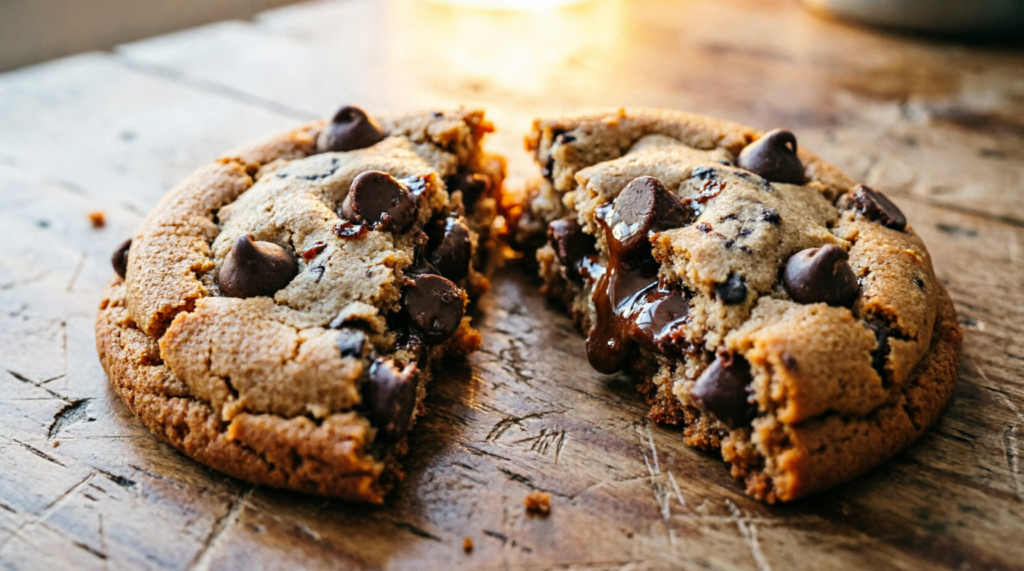
- Eggs are mostly water. A whole egg is roughly 77% water according to USDA nutrition data, so replacing it with a small amount of water gets you a similar moisture level in the dough, without the fat and protein that eggs also bring. That’s why these cookies bake up a little lighter in color and slightly less rich than an egg-based dough — but just as soft..
- Baking soda plus baking powder together gives the dough enough lift on its own, since we’ve removed the leavening boost eggs normally provide.
- Chilling the dough firms up the butter again after creaming, which slows the spread in the oven and gives you a thicker, chewier cookie instead of a thin, crispy one.
None of this is a trick or a shortcut — it’s simply understanding what eggs are actually doing in a cookie recipe, then rebuilding that function with a different ingredient.
Ingredients
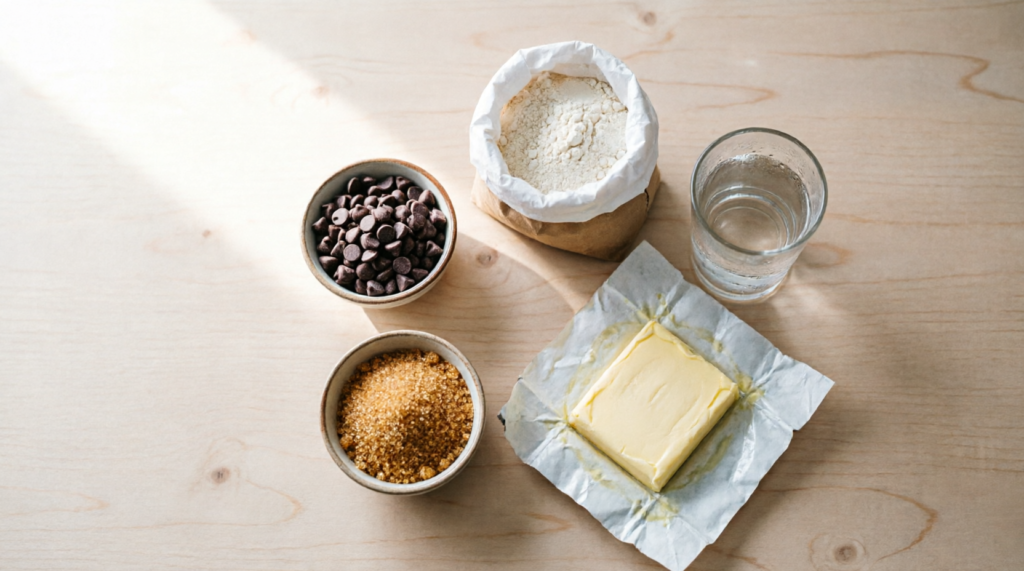
- ½ cup (113g) unsalted butter, softened
- ¼ cup (50g) granulated sugar
- ¾ cup (150g) brown sugar, packed
- ¼ cup (60ml) water, room temperature
- 2 tsp vanilla extract
- 1 ¾ cups (220g) all-purpose flour, spooned and leveled
- ¾ tsp baking soda
- ¼ tsp baking powder
- ½ tsp salt
- 1 cup (170g) chocolate chips (I like a mix of semi-sweet and dark)
Vegan option: swap the butter for a plant-based butter block and this recipe becomes fully vegan with no other changes needed.
How to Make Eggless Chocolate Chip Cookies
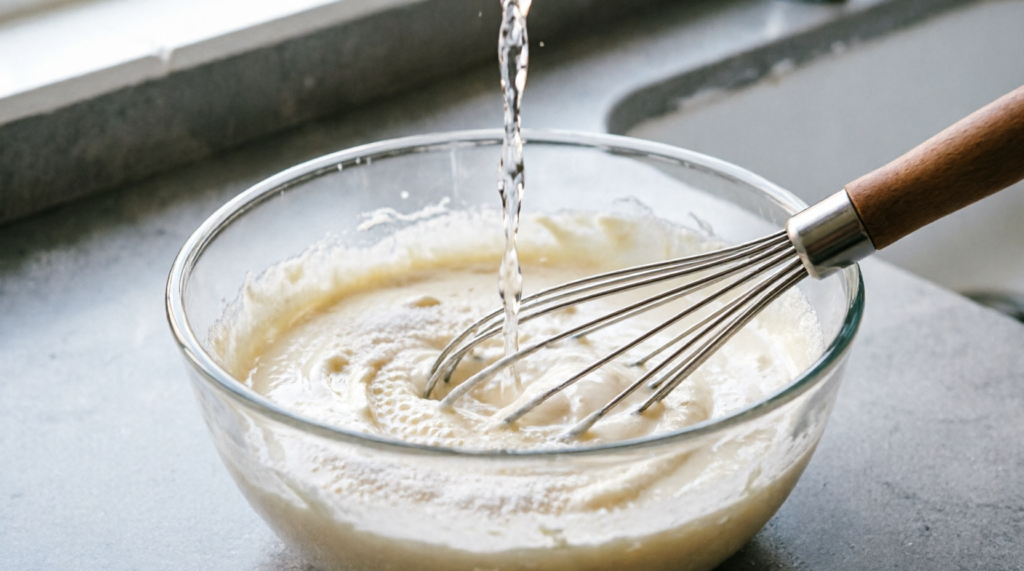
- Cream the butter and both sugars together for 2–3 minutes, until light and fluffy, scraping down the bowl as needed.
- Slowly add the water and vanilla, beating on low first. The mixture will look curdled and separated at this stage — that’s completely normal. Keep beating on medium-high for another minute or two, and it will come back together into a smooth, creamy batter.
- In a separate bowl, whisk together the flour, baking soda, baking powder, and salt.
- Mix the dry ingredients into the wet mixture on low speed until just combined. The dough will be soft and slightly sticky.
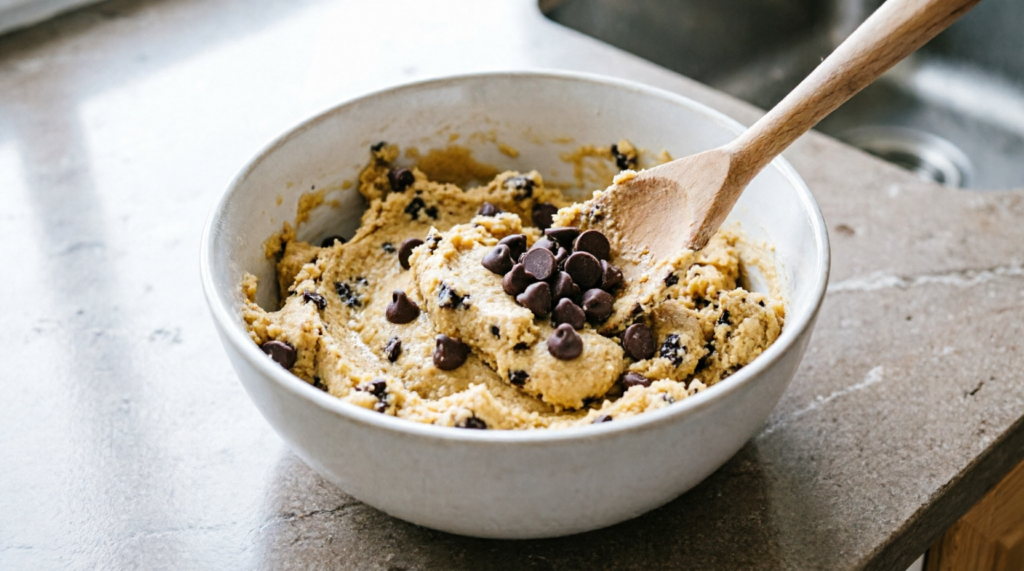
- Fold in the chocolate chips.
- Chill the dough for at least 30 minutes — this step matters more here than in most cookie recipes, since there’s no egg to help firm up the structure.
- Preheat your oven to 350°F (175°C) and line baking sheets with parchment paper.
- Scoop dough into 2-inch balls and place a few inches apart, since they will spread as they bake.
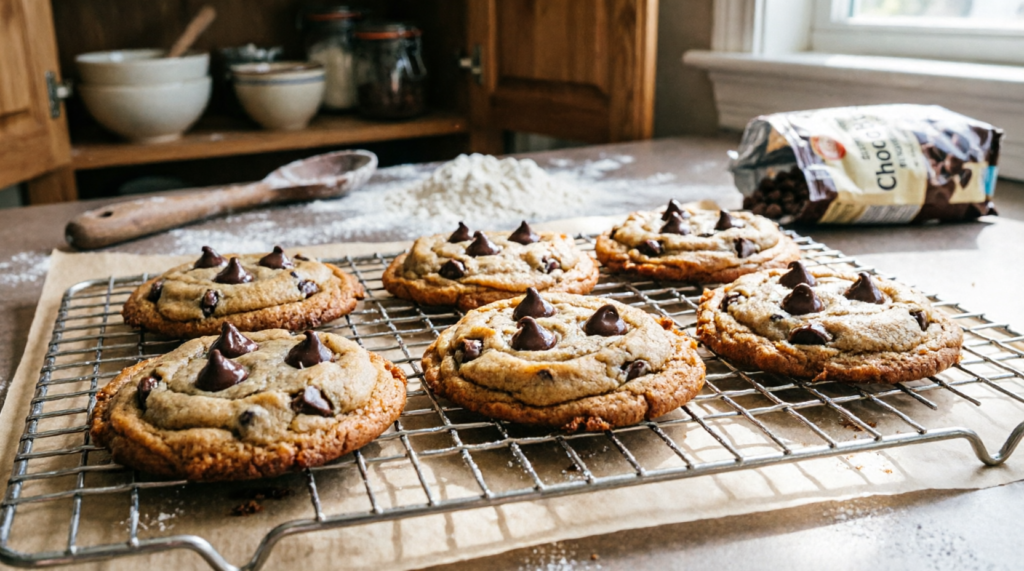
- Bake for 12–15 minutes. The centers will look puffy and slightly underbaked when you pull them out — trust this, they finish setting as they cool.
- Let them cool on the tray for 5 minutes before moving, since they’re delicate while warm and will flatten slightly as they rest.
Pro Tips for the Best Results
- Measure your flour carefully — spoon it into the measuring cup and level it off rather than scooping directly from the bag. Too much flour is the single most common reason these turn out dense instead of soft.
- Don’t skip the chilling step. Without egg to help bind the dough, chilling is what gives you a thicker cookie instead of one that spreads too thin.
- If your cookies aren’t spreading enough, flatten the dough balls slightly with your palm before baking, or gently press down on the tray with a spatula halfway through baking.
- Bake times vary by oven — start checking at 12 minutes, and pull them as soon as the edges turn golden even if the center still looks soft.
Substitutions
This recipe is easy to adapt depending on what you have on hand or what you’re avoiding:
- Vegan: Use a plant-based butter block in place of regular butter — no other changes needed.
- Dairy-free but not vegan: Same swap as above works well.
- Out of vanilla extract: A splash of almond extract or a spoonful of instant coffee dissolved in the water both work as flavor boosters.
- Chocolate chips: Any type works here — milk chocolate, dark chocolate, mini chips, or a roughly chopped chocolate bar all give good results.
How to Store and Freeze
Room temperature: Store in an airtight container for up to 5 days. These cookies genuinely stay soft, even a couple of days after baking.
Freezing baked cookies: Freeze in a single layer, then transfer to a freezer bag for up to 3 months.
Freezing cookie dough: Scoop into balls, freeze on a tray until solid, then store in a freezer bag. Bake straight from frozen, letting the dough balls sit at room temperature for about 5 minutes first, then add 1–2 extra minutes to the bake time.
Frequently Asked Questions
Can I substitute milk for the water?
Yes, milk works fine in place of water and will add a very slight richness to the flavor. The texture stays about the same either way.
Why did my cookies come out cakey instead of chewy?
This is almost always caused by too much flour. Make sure you’re spooning the flour into your measuring cup and leveling it off, rather than scooping directly from the bag, which packs in extra flour without you realizing it.
My cookie dough looked curdled after adding the water — did I do something wrong?
No, that’s completely normal at this stage. Keep beating on medium-high speed for another minute or two and the mixture will come back together into a smooth batter.
Is it safe to eat this cookie dough raw?
Removing the egg does lower one risk factor, but raw flour itself can also carry bacteria. If you want to safely eat some dough before baking, heat-treat the flour first by spreading it on a baking sheet and baking at 350°F for about 5 minutes before using it in the recipe. Or for a dough built specifically to be eaten as-is with this step already done for you, try our Chocolate Chip Cookie Dough Recipe.
Can I make this into mini cookies?
Yes, this dough works well scooped smaller. For a dedicated bite-sized version with the ratios already adjusted, check out our Mini Chocolate Chip Cookies recipe.
What’s the classic, egg-based version of this recipe?
If eggs aren’t a concern for you, our Betty Crocker-Inspired Chocolate Chip Cookies is the traditional, old-fashioned version this recipe is adapted from.
Would melted butter work better in this recipe?
This particular recipe is built around softened, creamed butter for structure since there’s no egg. If you want to explore how melted butter changes texture in chocolate chip cookies generally, see our guide: Melting Butter for Chocolate Chip Cookies.
Is there a dairy-free or gluten-free version of this recipe?
For dairy-free, try our Dairy-Free Cookies. For a gluten-free, egg-free option, see our Gluten-Free Cookie Dough.
Do you have a keto-friendly cookie recipe?
Yes — check out our Keto Peanut Butter Cookies, a naturally gluten-free, low-carb option with just 2g net carbs per cookie.
Do you have other fun, easy cookie recipes?
Yes — if you’re in the mood for something festive, try our Birthday Cake Cookies, made with cake mix and sprinkles.
Nutrition (Per Cookie, Approximate)
Calories: 195 | Carbohydrates: 26g | Protein: 2g | Fat: 9g | Sugar: 16g
Nutrition values are estimated and may vary based on exact ingredients used.
More Recipes You’ll Love
| Recipe | Category |
|---|---|
| Double Chunk Chocolate Cookies | Chocolate Chip Cookies |
| Milk Chocolate Chip Cookies | Chocolate Chip Cookies |
| Mini Chocolate Chip Cookies | Chocolate Chip Cookies |